
Ask most data center developers why a community should welcome them and you get the same answer: tax revenue, jobs, investment. Two sessions at 7x24 Exchange Fall 2026 explained why that answer is failing, and what replaces it.
Where the economic pitch stops working
Monday's "Powering Communities" conversation with Michael Clark of DC BLOX was candid about a gap every developer runs into. The county official is enthusiastic, calling constantly, eager for the investment. A resident two miles away doesn't trust the potholes will get fixed, never mind a bigger promise. In historically underserved, low-trust communities, the standard economic argument simply doesn't land.
What has worked, in their experience:
- Be a new neighbor first. Investing up front, before asking for support, builds the credibility a pitch can't.
- Make it tangible and local. In one case, open and outdoor space mattered most. In another, a union labor commitment on adjacent work (not even the site itself) turned skeptics into allies.
- Repurposing helps, but isn't enough. Building on a brownfield site counts for something. It doesn't quiet opposition on its own.
- Ask before you offer. No single benefits package works everywhere, so collecting data on what a community actually needs comes first.
- Aim for the movable middle. You won't satisfy everyone. Focus on the people who can be persuaded.
The license to keep operating
Tuesday's keynote from Nabeel Mahmood (Nomad Futurist) gave the idea a name: social licensing, "the ongoing permission a community grants you to keep operating." His point was the word ongoing. A community may grant permission to build once, but the trust to remain is earned over decades.
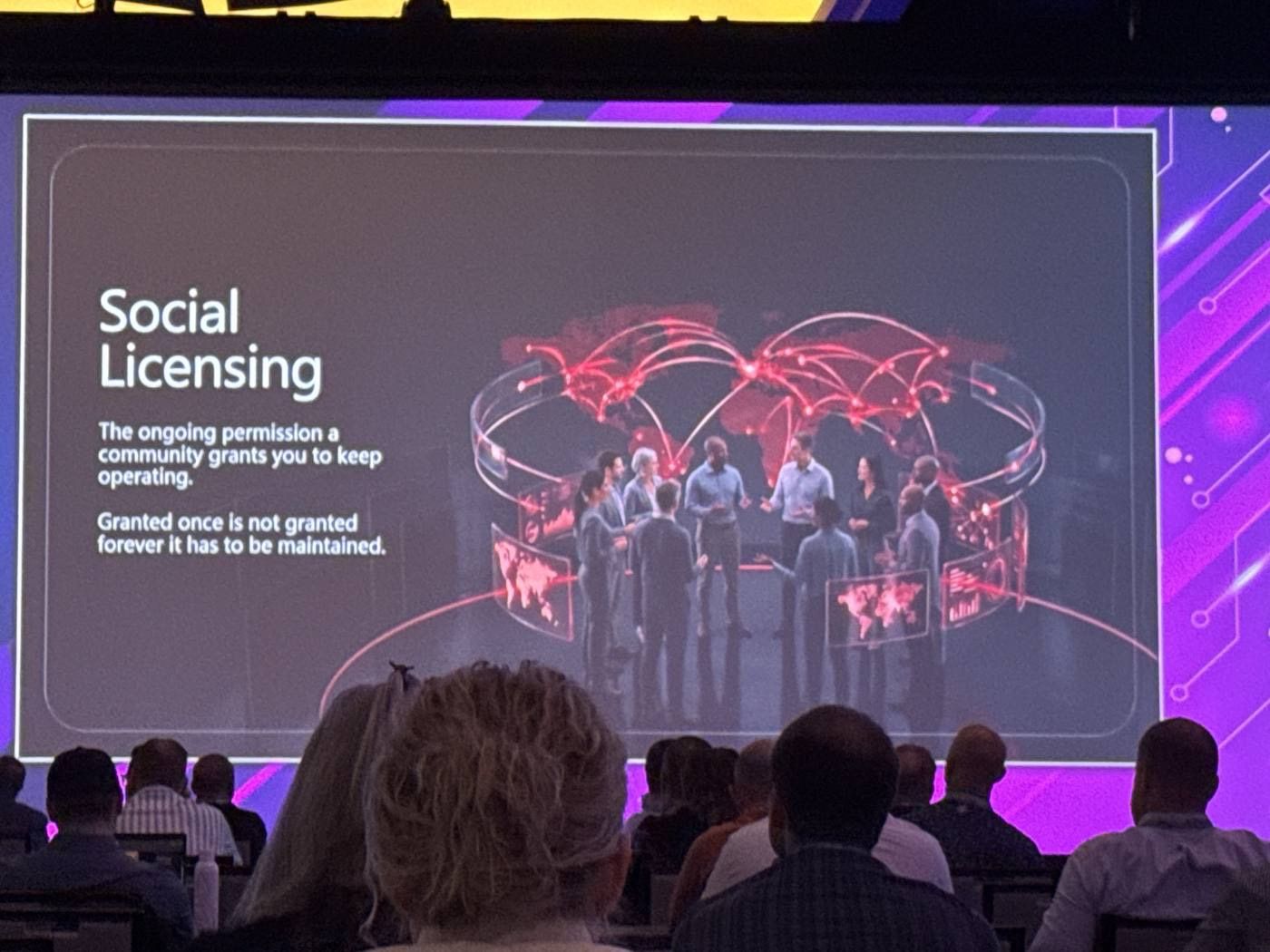
Nabeel Mahmood's keynote (Nomad Futurist), 7x24 Exchange Fall 2026, photographed from the audience.
He listed legitimacy alongside power, heat, latency and talent as one of the five constraints on the industry, and he was specific about what earning it takes: a transparency framework covering energy demand, water consumption, grid impact and economic opportunity, all in plain language. "Complexity should not become an excuse for opacity." One of his slides showed the physical version: data halls bermed into parkland, with walking paths over the top and the cooling tucked into the landscape.
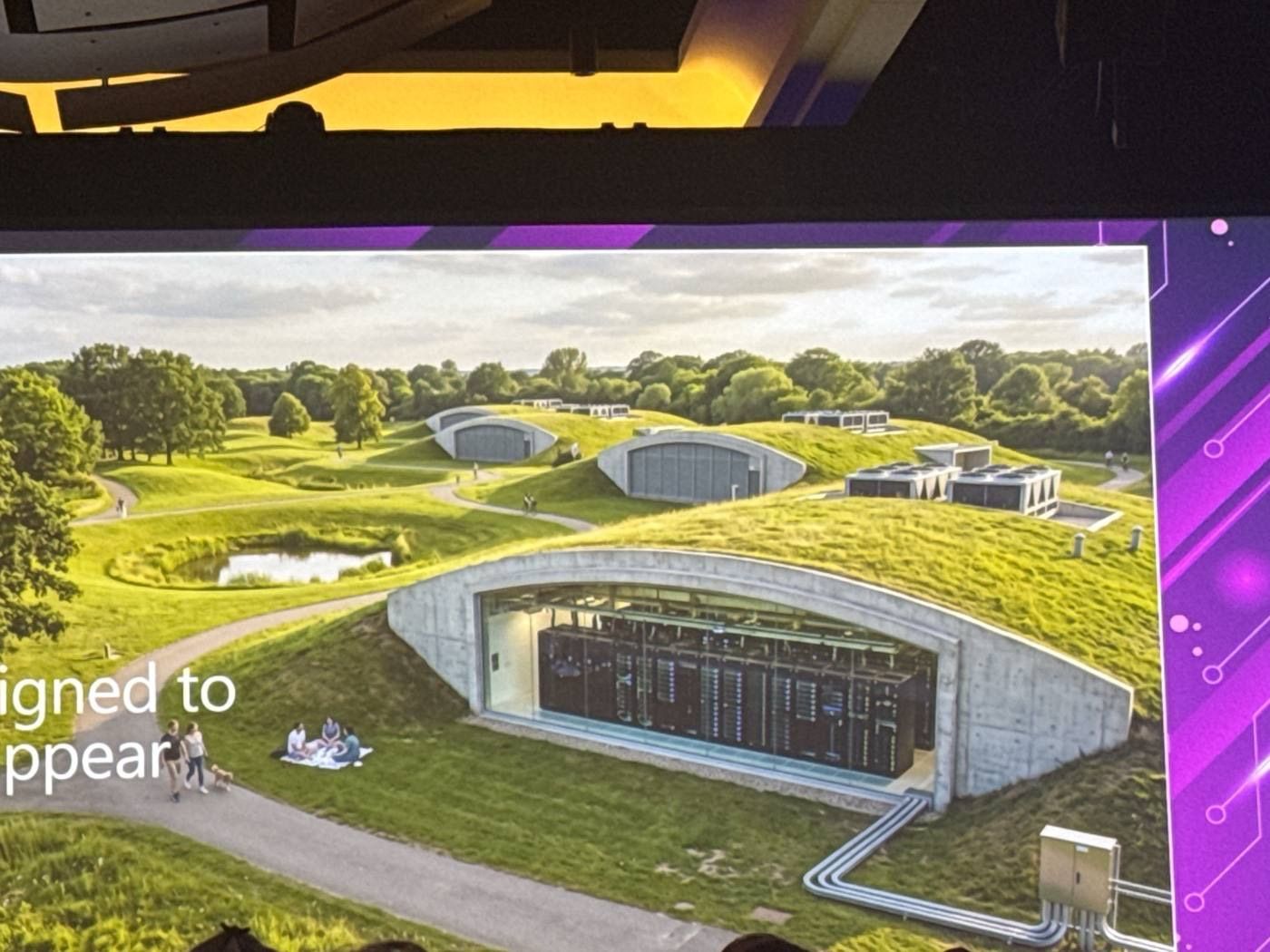
Nabeel Mahmood's keynote (Nomad Futurist), 7x24 Exchange Fall 2026, photographed from the audience.
What we took from it
Both sessions point the same way. The permission to build is a moment. The permission to stay is a record: what the facility actually draws from the grid, how much water it actually uses, what it actually gives back, published in terms a neighbor can read and check.
That record has to come from the facility's own data, not a brochure. It's why we think community transparency belongs next to reliability and efficiency in an operator's toolkit, not in the marketing budget.