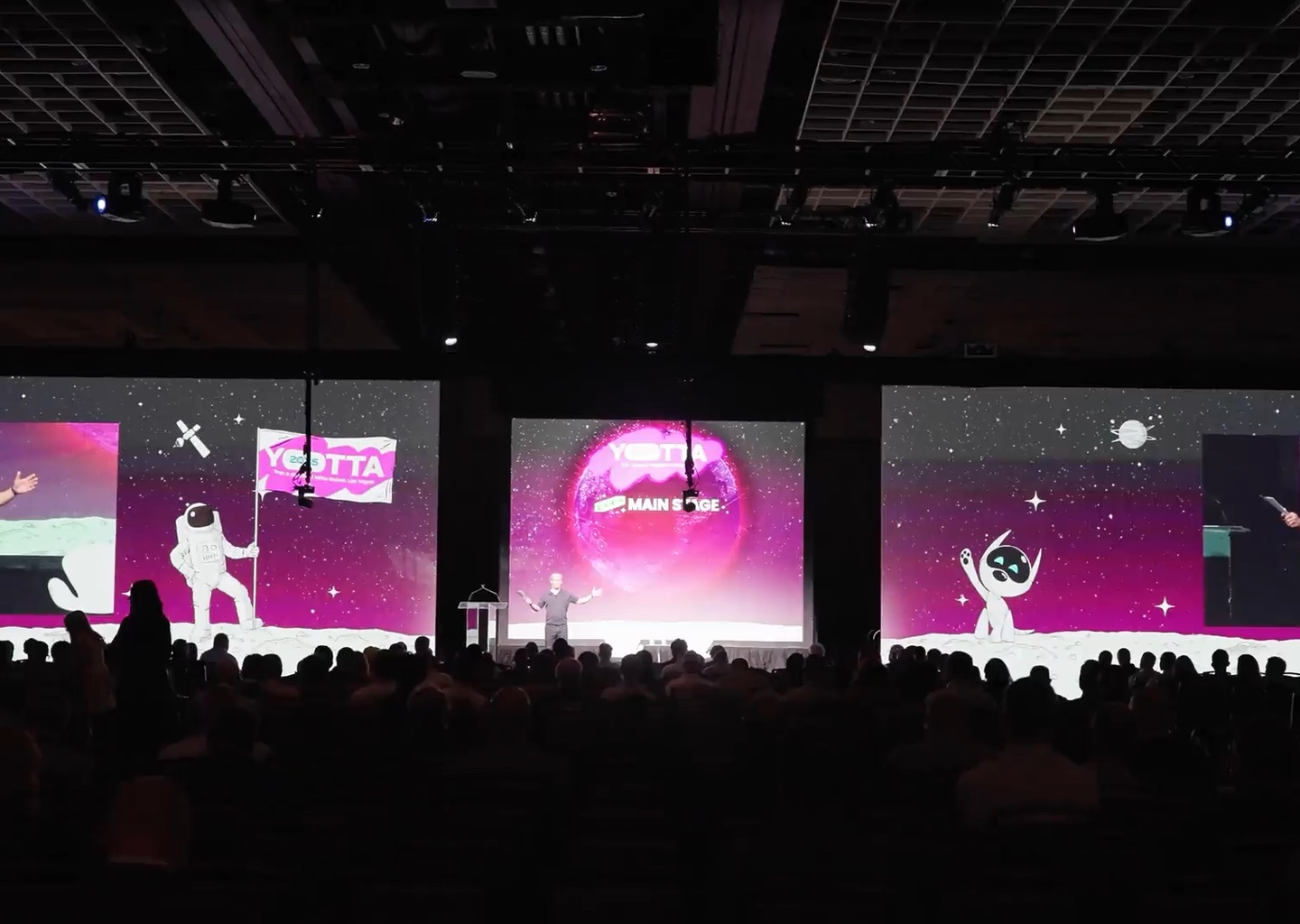
The Yotta 2026 expo hall in Las Vegas was full of very different products: cooling hardware, batteries, flywheels, fuel cells, power electronics, software, GPU clouds. Walk it end to end, though, and nearly every booth was telling the same story. Power is the bottleneck, and everyone is selling a way around it.
Liquid cooling, and watching it
As racks go liquid, the coolant itself becomes something to monitor. Omen AI showed fluid-health monitoring for liquid-cooled halls, and DCX Liquid Cooling and XNRGY Climate Systems were there on the hardware side. Phaidra, which applies AI to cooling control, was on the floor too.
Fewer conversions between the grid and the chip
DC distribution was everywhere. CE+T America showed power conversion for 400 V and 800 V DC, and Enphase previewed a solid-state transformer meant to take medium-voltage AC straight to 800 V DC. It's the same direction the IEEE and ImpactCx sessions at 7x24 Exchange pointed a month later: fewer stages, fewer losses.
Riding through the swings
GPU training loads swing hard, and a cluster of exhibitors was built around absorbing that: Torus with flywheels paired with batteries, ON.energy with a medium-voltage UPS designed for AI loads, and battery storage makers on the floor. FuelCell Energy made the case for layering fuel cells, batteries and UPS together.
Power you don't have to wait for
For sites stuck in interconnection queues, the pitch was to bring power on site or find it elsewhere on the grid: on-site generation and combined heat and power, and GridCARE, which looks for spare capacity already on the grid.
Nuclear, pitched as the answer to NIMBYism
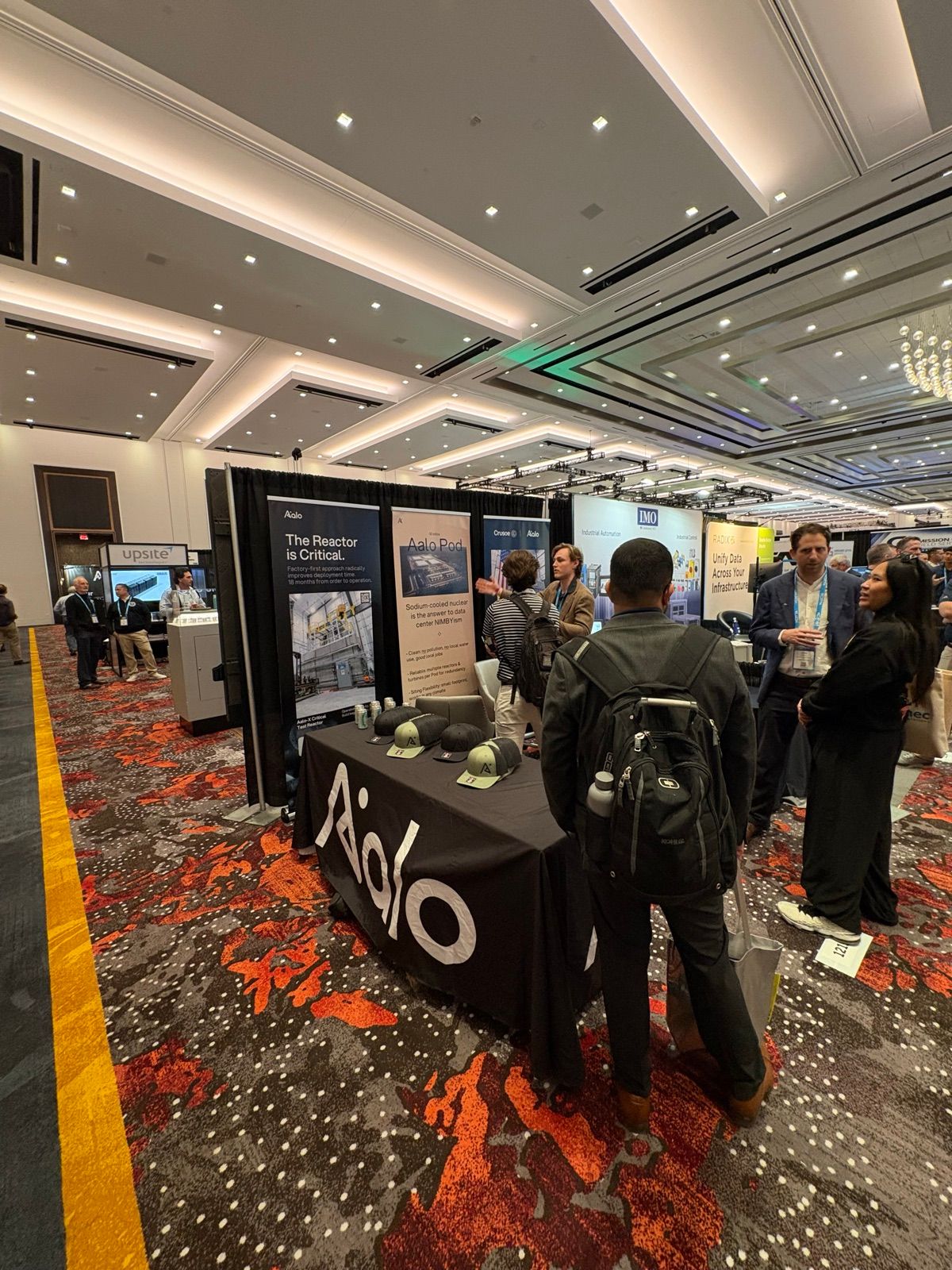
The boldest version of "bring your own power" was at Aalo's booth. Its banners made the case for small, factory-built nuclear: sodium-cooled reactors, built factory-first to cut deployment to 18 months from order to operation, with several reactors and turbines in each "Aalo Pod" for redundancy. A banner with Crusoe's name sat alongside them.
The headline banner was aimed squarely at the community fight from the 7x24 sessions: "Sodium-cooled nuclear is the answer to data center NIMBYism." The banner's argument was no pollution, no local water use and good local jobs, on a small footprint that works in any climate.
Seeing what you already have
The quieter booths were about visibility. Aravolta showed infrastructure monitoring, Sunbird its DCIM software, and Hammerhead AI argued that data centers leave much of their allocated power unused, and that getting it back starts with measuring it.
What we took from it
Every one of those products changes how a facility behaves, and every one makes the same promise: more compute from the power you can get. Proving it takes the same thing in every case: a clear, continuous picture of what the building is actually doing, before and after.